
September 1st 2026
The European Commission is proposing a new mechanism, financed through EU ETS allowances, which could cover a significant share of the price gap between fossil marine fuels and sustainable alternatives. Known as the Sustainable Maritime Alternative Propulsion mechanism (SMAP), it could mobilise up to 110 million EU Allowances (EUAs) by the end of 2040.
For biomethane and bio-LNG, the proposal is relevant because it could improve the competitiveness of eligible fuels compared with fossil LNG. However, this conclusion should not be overstated: the SMAP mechanism has not yet been adopted, biomethane producers would not be the direct beneficiaries, and access to support would not be automatic. Its economic value will depend on the final legislation, fuel eligibility, MRV data, the EUA price, and the way in which the benefit is allocated through contracts between participants in the maritime value chain.
SMAP Is a Legislative Proposal, Not an Operational Programme
On 17 July 2026, the European Commission presented its proposal to revise the EU ETS Directive for the post-2030 period. The proposed new Article 3gaa introduces the SMAP mechanism as an instrument supporting the use of sustainable marine fuels and zero-emission propulsion technologies.
In the version published by the Commission, the mechanism would reserve a maximum of 110 million EUAs, from 1 January 2028—or from the first year after the amendments enter into force—until 31 December 2040. The allowances would be awarded to shipping companies for the eligible and verified use of fuels and technologies covered by the mechanism. Read more in the European Commission proposal COM(2026) 616 and the text of the proposal, Article 3gaa.
The proposal must be negotiated and adopted by the European Parliament and the Council. The percentages, timetable, conditions, and allocation procedure may therefore change. In addition, some of the technical rules governing the calculation of the price gap, supporting documentation, applications, verification, and the prevention of overcompensation will require delegated and implementing acts.
For this reason, the SMAP mechanism cannot currently be treated as a guaranteed source of finance for an investment. It is, however, a sufficiently important policy signal for fuel producers, suppliers, and shipping companies to begin preparing their technical, commercial, and contractual scenarios.
How the SMAP Mechanism Would Work
The SMAP mechanism would not cover the full price of the alternative fuel. Under the proposal, it would compensate a percentage of the remaining price difference compared with the fossil marine reference fuel or, in the case of zero-emission propulsion technologies, a percentage of the eligible additional cost.
The proposed base support rates are:
- 55% for biogas, including eligible biomethane or bio-LNG, and advanced biofuels;
- 90% for renewable fuels of non-biological origin (RFNBOs), such as eligible e-methanol, e-ammonia, or e-LNG;
- 80% for eligible hydrogen and low-carbon fuels;
- 90% of the eligible additional cost for zero-emission propulsion technologies, including electric propulsion and wind-assisted propulsion.
The proposal also includes possible increases in the support rate:
- +10 percentage points for fuels produced from feedstocks originating in the European Union or certain eligible third countries;
- +5 percentage points for use on certain voyages between a mainland port and an island port under the jurisdiction of a Member State;
- +5 percentage points for zero-emission propulsion technologies installed on ships in European Union shipyards.
For eligible bio-LNG, the theoretical rate could therefore rise from 55% to 65% through the feedstock-origin bonus and, in certain eligible island situations, to as much as 70%. This is a theoretical level, not a payment guarantee.
A simplified example illustrates the mechanism. If the eligible price difference between compliant bio-LNG and the fossil reference fuel were, hypothetically, EUR 60/MWh, a 55% rate would correspond to a theoretical value of EUR 33/MWh. At 65%, the theoretical value would be EUR 39/MWh. This example is not an estimate of the actual support: reference prices, calculation units, caps, verification, and any proportional reduction will depend on the final rules.
Why 110 Million EUAs Do Not Represent a Fixed Budget in Euros
The proposal defines the cap in EUAs, not as a fixed sum of money. The mechanism’s total economic value will therefore vary with the EUA price and will depend on the timetable under which the allowances are used or monetised in accordance with the final rules.
GLC Energy estimates a value of approximately EUR 10 billion, while an institutional presentation of the proposal refers to around EUR 15 billion. The two figures are not necessarily contradictory: they may reflect different assumptions about allowance prices. At a purely illustrative price of EUR 90/EUA, 110 million allowances would have a gross value of approximately EUR 9.9 billion. (GLC Energy; Council of the European Union)
There is another important limitation: all eligible categories would compete for the same reserve of allowances. If annual applications exceed the available volume, the proposal provides for a uniform, pro-rata reduction in allocations. A company should therefore not model the entire nominal percentage as guaranteed revenue.
Bio-LNG Does Not Become Eligible Based on Its Commercial Label Alone
For the biogas category, the proposal links eligibility to the possibility of applying a zero emission factor under EU ETS rules. This treatment does not follow automatically from the use of labels such as “bio-LNG”, “biomethane”, or “renewable gas”.
In practice, the operator must be able to demonstrate compliance with the applicable sustainability and greenhouse gas emissions-saving criteria under the Renewable Energy Directive, as well as the quantity of eligible fuel used. The documentation must allow verification of origin, feedstocks, certification, batches, the mass-balance chain of custody, and the correlation between declared volumes and reported consumption.
Without compliant evidence, the biomass fraction cannot benefit from a zero emission factor under the EU ETS. The consequence can be twofold: the shipping company may face a higher EU ETS obligation than estimated and may lose eligibility for support under the SMAP mechanism for that fuel. (European Commission, Guidance on biomass and zero-rating under the EU ETS; European Commission, EU ETS/MRV guidance for maritime transport)
For suppliers, this means that commercial value is not determined solely by the fuel’s physical composition. The quality of the chain of custody, data consistency, and the ability to have the documentation verified by an independent third party are equally important.
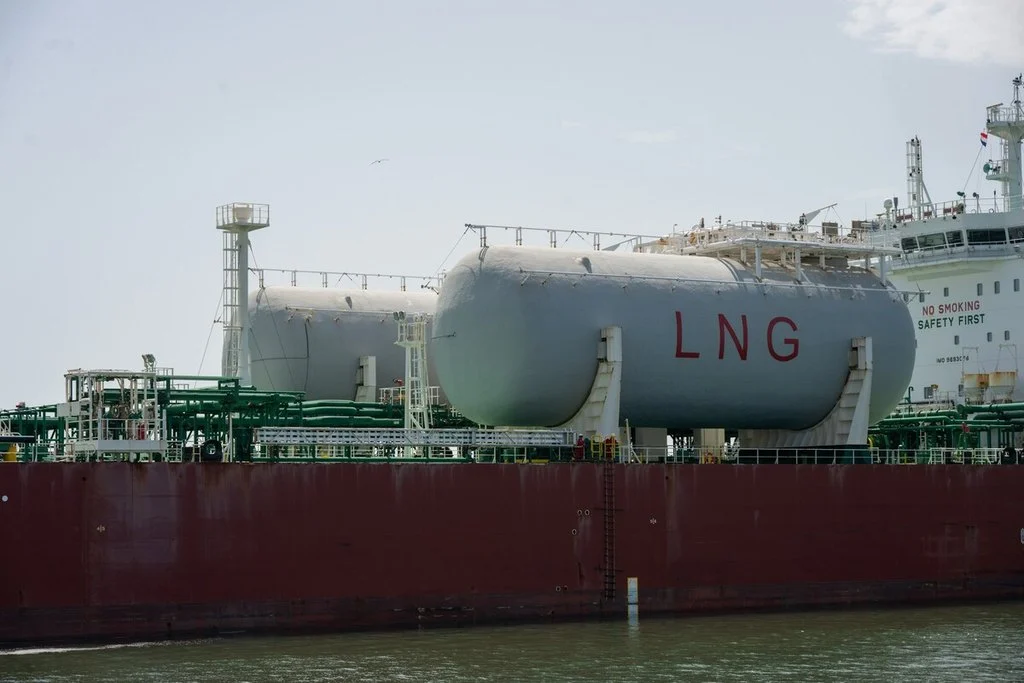
A “Zero Emission Factor” in the EU ETS Does Not Mean Zero Physical Emissions
The term “zero-rated” must be used precisely. In the EU ETS, it describes conditional accounting treatment for the eligible biomass fraction. It does not mean that producing, transporting, liquefying, and using bio-LNG generates no emissions across its full life cycle.
FuelEU Maritime uses a Well-to-Wake approach, covering both upstream—or Well-to-Tank—emissions and those associated with on-board use, known as Tank-to-Wake emissions. For certain LNG engine configurations, the assessment also includes unburned methane emissions, commonly known as methane slip. (European Commission, FuelEU Maritime—Questions and Answers)
Consequently, a general statement that bio-LNG is “emissions-free” would be technically incorrect and could be misleading. Accurate wording must distinguish between:
- the treatment of eligible emissions under the EU ETS;
- life-cycle GHG intensity calculated for FuelEU Maritime;
- physical emissions generated at different stages of the value chain;
- emissions savings compared with a defined and documented comparator.
EU ETS, FuelEU Maritime, and SMAP Have Different Functions
The three instruments are complementary, but they are not interchangeable.
EU ETS places a price on carbon and requires the shipping company to surrender allowances for emissions within its scope. Using a fuel eligible for zero-rating may reduce the compliance obligation if all applicable conditions and evidence requirements are met.
FuelEU Maritime limits the GHG intensity of the energy used on board, assessed on a life-cycle basis. Compliance depends on Well-to-Wake performance, not solely on the accounting treatment applied under the EU ETS.
The SMAP mechanism would add an economic incentive covering part of the price difference or additional cost associated with eligible alternatives. It would neither remove existing obligations nor automatically make a fuel compliant or commercially viable. (European Commission, FuelEU Maritime—Questions and Answers; Impact assessment SWD(2026) 616, Part 3)
A robust assessment must model the fuel cost, EUA savings, FuelEU performance, potential support from the SMAP mechanism, and data or eligibility risks at the same time. Assessing only one element may lead to an incorrect commercial conclusion.
Who Would Receive Allowances Under the SMAP Mechanism?
The direct beneficiary envisaged by the proposal is the shipping company, not the biomethane producer or supplier. The company would apply annually for allowances based on eligible fuels used and verified emissions reductions achieved during the preceding calendar year. (Proposal COM(2026) 616, Article 3gaa(3) and (10))
For biomethane or bio-LNG producers and suppliers, the benefit would be indirect. The SMAP mechanism could support demand, improve the maritime customer’s ability to pay the price premium, and facilitate longer-term offtake contracts. This effect would not, however, be automatic: it would depend on how the value of the support is transferred or shared within the commercial relationship.
The contractual chain may include the shipowner, the shipping company responsible under the EU ETS, the technical operator, the charterer, the bunker supplier, and the fuel producer. Unless rights and obligations are clearly defined, disputes may arise over who bears the price premium, who controls the data, who submits the application, and who retains the resulting economic benefit.
Contracts Must Address More Than the Fuel Price
Offtake, supply, and bunkering agreements should be reviewed from the combined perspective of the EU ETS, FuelEU Maritime, and SMAP. At a minimum, the following elements require clear drafting:
- the fuel specification and applicable quality standards;
- the RED and EU ETS eligibility criteria warranted by the supplier;
- sustainability documentation and delivery deadlines;
- the rules governing mass balance, batches, and quantity reconciliation;
- liability for data that are incorrect, incomplete, or rejected by the verifier;
- allocation of the additional cost compared with fossil fuel;
- entitlement to the SMAP economic benefit and the transfer formula, where the parties agree to such a transfer;
- price adjustment if the allocation is reduced pro rata or the legislation changes;
- measures to prevent double claiming and overcompensation;
- audit rights, record-retention requirements, and cooperation with the verifier.
It is premature to assume that a particular contractual structure will be accepted in every case. The final rules may introduce additional requirements. Nevertheless, identifying responsibilities now reduces the risk that a technically sound fuel becomes ineligible because of inadequate documentation or contractual arrangements.
What Data Will Matter in the Financial Model?
An investment or procurement decision should not be based on the nominal support percentage under the SMAP mechanism in isolation. The financial model should include at least:
- the price difference between the alternative fuel and the fossil reference fuel;
- the EUA price and allowance savings resulting from eligible treatment;
- Well-to-Wake GHG intensity and the effect on FuelEU Maritime compliance;
- methane slip, where relevant to the engine type;
- certification, traceability, verification, storage, and bunkering costs;
- the applicable SMAP rate and the probability of a pro-rata reduction;
- the risk that some of the volume or documentation is found ineligible;
- when the benefit may be claimed and the resulting cash-flow effect;
- contractual clauses governing the sharing of the benefit and changes in legislation.
At least three scenarios are recommended: prudent, central, and favourable. The prudent scenario should assume a support percentage under the SMAP mechanism below the nominal rate, a lower EUA price, and higher compliance costs. An investment that is viable only under the maximum-support scenario has a high-risk profile.
A Separate Opportunity Through the Modernisation Fund
Separately from SMAP, the European Commission proposal expands the Modernisation Fund’s priorities and expressly lists the production and use of biogas and biomethane among eligible priority investments. Member States would also be required to direct at least 50% of their national EU ETS revenues towards decarbonising ETS sectors. (Proposal COM(2026) 616—amendments to Articles 10 and 10d)
This provision does not mean that every biomethane project will receive funding. Actual access will depend on the final form of the Directive, the Member State’s eligibility, national funding priorities, State aid rules, and the criteria of each call for proposals. SMAP and the Modernisation Fund should be analysed as separate instruments with different beneficiaries and conditions.
What Interested Companies Should Do Now
Before the final legislation is adopted, the useful course of action is not to build a commercial promise around SMAP, but to prepare the relevant data and scenarios.
- Verify fuel eligibility. The assessment should be carried out separately under RED, the EU ETS, and FuelEU Maritime; the same commercial label does not guarantee the same treatment under all three frameworks.
- Build the MRV and traceability file. Include certification, origin, feedstocks, batches, mass-balance records, bunker quantities, consumption data, and documents required for verification.
- Model the total compliance value. Calculate EU ETS savings, FuelEU performance, and SMAP support separately, and then integrate the results into a single financial model.
- Review the contracts. Establish who bears the price premium, who controls the data, who submits the application, who retains the support, and what happens if an allocation is reduced or rejected.
- Prepare for legislative change. The final text may modify the percentages, timetable, criteria, and procedures.
- Avoid claims of “zero emissions” or “guaranteed funding”. Such claims are not technically supported by the current proposal.
Carbon Expert’s Conclusion
The SMAP mechanism could become an important instrument for reducing the cost gap between fossil marine fuels and sustainable alternatives. For biomethane and bio-LNG, the 55% base rate, together with the possible increases, could support demand and improve the economics of certain supply agreements.
However, the mechanism does not remove the fundamental challenges: bio-LNG must be eligible and properly documented; a zero emission factor under the EU ETS is not equivalent to zero life-cycle emissions; the direct beneficiary would be the shipping company; and annual allocations may be reduced pro rata.
The best-positioned companies will not be those promoting a guaranteed benefit today, but those able to demonstrate fuel eligibility, data quality, Well-to-Wake performance, and a coherent contractual structure.
Carbon Expert can support producers, suppliers, and users of marine fuels with RED/EU ETS/FuelEU Maritime eligibility assessments, Well-to-Wake emissions calculations, MRV framework preparation, SMAP and EUA scenario modelling, and the technical structuring of offtake agreements.
Contact: www.carbonexpert.eu
Sources
- European Commission, Proposal for a Directive COM(2026) 616 final, 17 July 2026
- Text of Proposal COM(2026) 616, including Article 3gaa
- Council of the European Union, presentation of the EU ETS revision proposal, WK 10833/2026 INIT
- European Commission, Impact Assessment SWD(2026) 616 final, Part 3/5
- European Commission, FuelEU Maritime—Questions and Answers
- European Commission, Guidance on biomass and zero-rating under the EU ETS, version of 26 September 2025
- European Commission, EU ETS and MRV guidance for maritime transport
- GLC Energy, “EU ETS Revision 2026: What the New SMAP Mechanism Means for Biomethane and Bio-LNG”
Note: This article provides a technical interpretation of the legislative proposal available as at 31 August 2026. It does not constitute legal advice. The final legislative act may differ.